

Quick Answer
Mitochondrial dysfunction and aging are linked. In 146 healthy adults aged 18 to 89, muscle mitochondrial DNA and ATP production fell with age and tracked with aerobic capacity and glucose tolerance. A later study found endurance exercise partly normalizes this decline. Fatigue has many causes, so mitochondria are one possibility to test, not a diagnosis.
Key Takeaways
- In 146 healthy adults aged 18 to 89, mitochondrial ATP production in muscle declined with advancing age.
- Higher ATP production was closely associated with better aerobic capacity and glucose tolerance.
- In a study of 42 sedentary and endurance-trained adults, the age-related decline in mitochondrial oxidative capacity was absent in endurance-trained individuals.
- Mitochondrial dysfunction is one of twelve proposed hallmarks of aging.
- NAD+ and glutathione work together to support mitochondrial energy and redox balance.
Everything takes more effort than it used to: the stairs, the long days, the third meeting after lunch. Mitochondria often get the blame, and products promising to restore cellular energy are easy to find. Here’s what the research shows about mitochondria and aging, and where it stops.
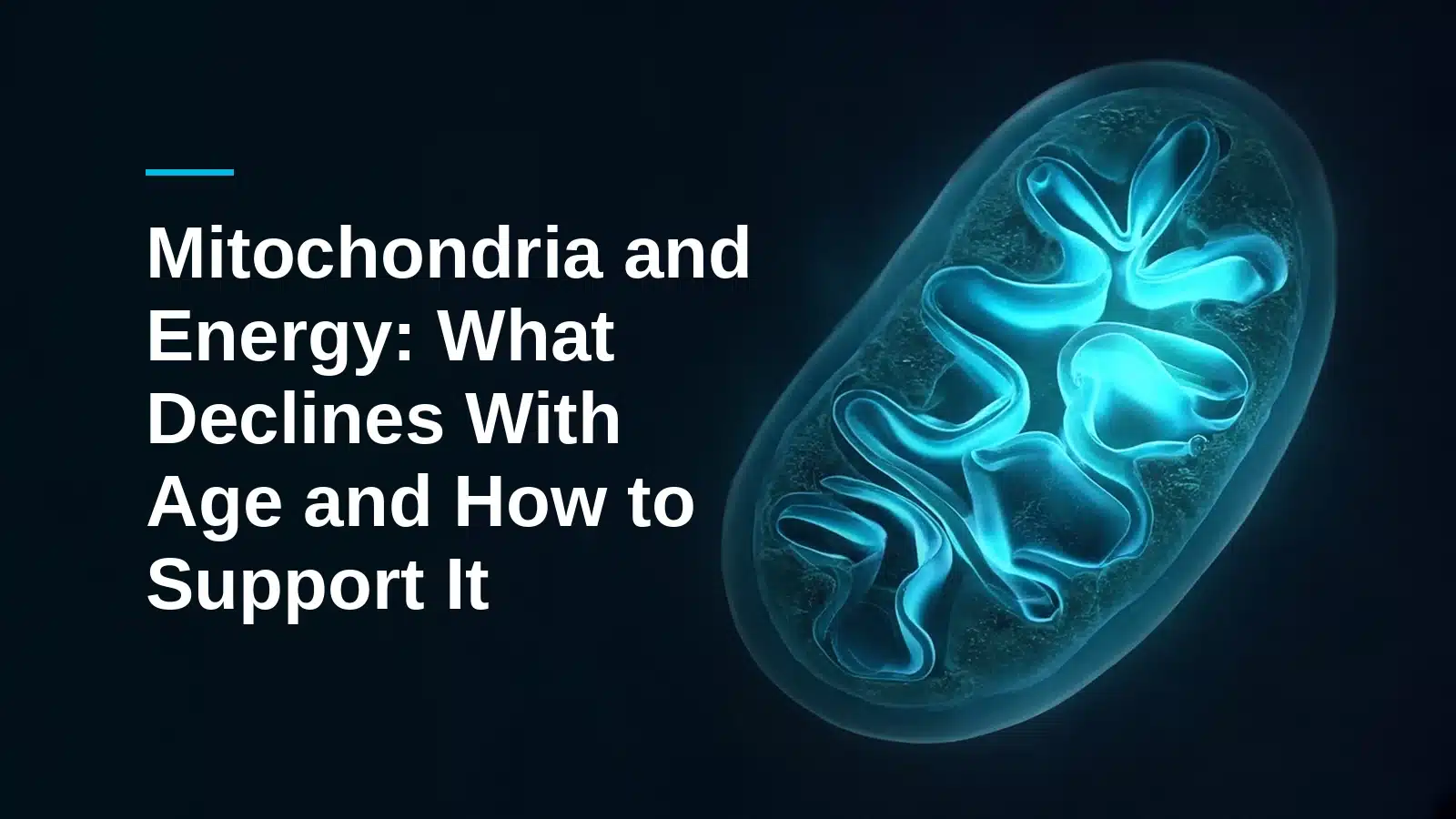
What Do Mitochondria Do?
They convert fuel into usable energy, in the form of ATP. Muscle, brain, and heart cells depend on them heavily, which is why changes in mitochondrial function are linked to fatigue and reduced capacity.
A review of the biology of aging lists mitochondrial dysfunction as one of twelve proposed hallmarks, alongside chronic inflammation, cellular senescence, and epigenetic changes (López-Otín and colleagues, Cell, 2023).
Do Mitochondria Decline With Age?
In muscle, yes. A study of 146 healthy adults aged 18 to 89 found that mitochondrial DNA, messenger RNA, and ATP production all declined with advancing age. ATP production was closely associated with aerobic capacity and glucose tolerance. Several mitochondrial proteins were lower in older muscle, and a marker of oxidative DNA damage was higher (Short and colleagues, PNAS, 2005).
This links a cellular measure to two things leaders care about: aerobic capacity and blood sugar control.
Is the Decline Inevitable?
Partly avoidable, according to one study. Researchers compared 42 healthy sedentary and endurance-trained young and older adults. The age-related decline in mitochondrial oxidative capacity was absent in endurance-trained individuals. Insulin sensitivity was higher in trained adults of both ages, and it was linked to physical inactivity and adiposity rather than being an inevitable result of aging. Some effects of age on mitochondrial DNA persisted even in trained people (Lanza and colleagues, Diabetes, 2008).
The study compared groups at one point in time, so it can’t prove that training caused the difference. It supports the idea that regular endurance exercise partly offsets age-related mitochondrial decline.
That’s the practical point. Aerobic fitness is something you can test and train, starting now.
| Question | What Research Shows | Limit |
|---|---|---|
| Do muscle mitochondria change with age? | ATP production declines in adults aged 18 to 89 | Cross-sectional study |
| What does ATP production relate to? | Aerobic capacity and glucose tolerance | Association |
| Is decline inevitable? | Absent in endurance-trained adults | 42 participants |
| Can redox support help? | GlyNAC improved mitochondrial function in older adults | 16-week randomized trial |
Does Low Mitochondrial Function Explain Your Fatigue?
It can be part of the picture, and fatigue usually has more than one driver. Sleep, iron, thyroid, blood sugar, and hormones all matter, and they are easier to test than mitochondria. See ferritin and iron fatigue and low energy after 40.
Precision Performance Medicine starts with measurable causes and fitness testing before looking at cellular theories. For fitness measures, see VO2 max and metabolic testing.
What About Mitochondrial Supplements?
A4M faculty describe NAD+ and glutathione as coordinated redox systems at the core of mitochondrial health. NAD+ fuels ATP production and repair enzymes, while glutathione keeps oxidative stress in check. In a 16-week randomized trial in older adults, glycine plus N-acetylcysteine (GlyNAC), the building blocks of glutathione, improved glutathione, oxidative stress and mitochondrial function compared with placebo (Kumar and colleagues, Journals of Gerontology, 2023). For more, see why NAD+ declines with age. Exercise still comes first, and product quality matters, so supplement choices are best made with a physician who knows your labs.
Frequently Asked Questions
Do Mitochondria Get Worse With Age?
In muscle, studies show mitochondrial DNA and ATP production decline with age. The decline wasn’t seen in endurance-trained adults in one comparison.
Can Exercise Improve Mitochondrial Function?
Endurance-trained older adults didn’t show the age-related decline in mitochondrial oxidative capacity seen in sedentary adults. That was a comparison, not a training trial.
Is Mitochondrial Dysfunction a Cause of Fatigue?
It’s one possible contributor, but fatigue has many causes. A clinician should check more common ones first.
Can a Blood Test Measure Mitochondrial Health?
The studies here used muscle biopsies, which aren’t a routine test. Ask your clinician about practical alternatives such as fitness testing.
Should I Take Something for My Mitochondria?
Redox support such as GlyNAC improved mitochondrial function in a randomized trial of older adults. Exercise comes first, and supplement choices are best made with your physician.
Ready to Get Started?
Stop Guessing. Start Getting Answers.
If your energy has dropped, find out what’s driving it before guessing.
Medically reviewed by Tracy Gapin, MD

